I literally watched The Brood instead of going to therapy
The Brood(1979) - David Cronenberg, Body Horror - 3/5

Warning: This article is not a philosophical treatment of any issue. I attempt never to be mean spirited, but my intention here is to entertain and not to educate. I believe the things I say here of course, but I’m neither even-handed nor precise in their treatment. If you’re a therapy enjoyer don’t read on, doing so is only purposefully upsetting yourself and we all know you really don’t need that right now.
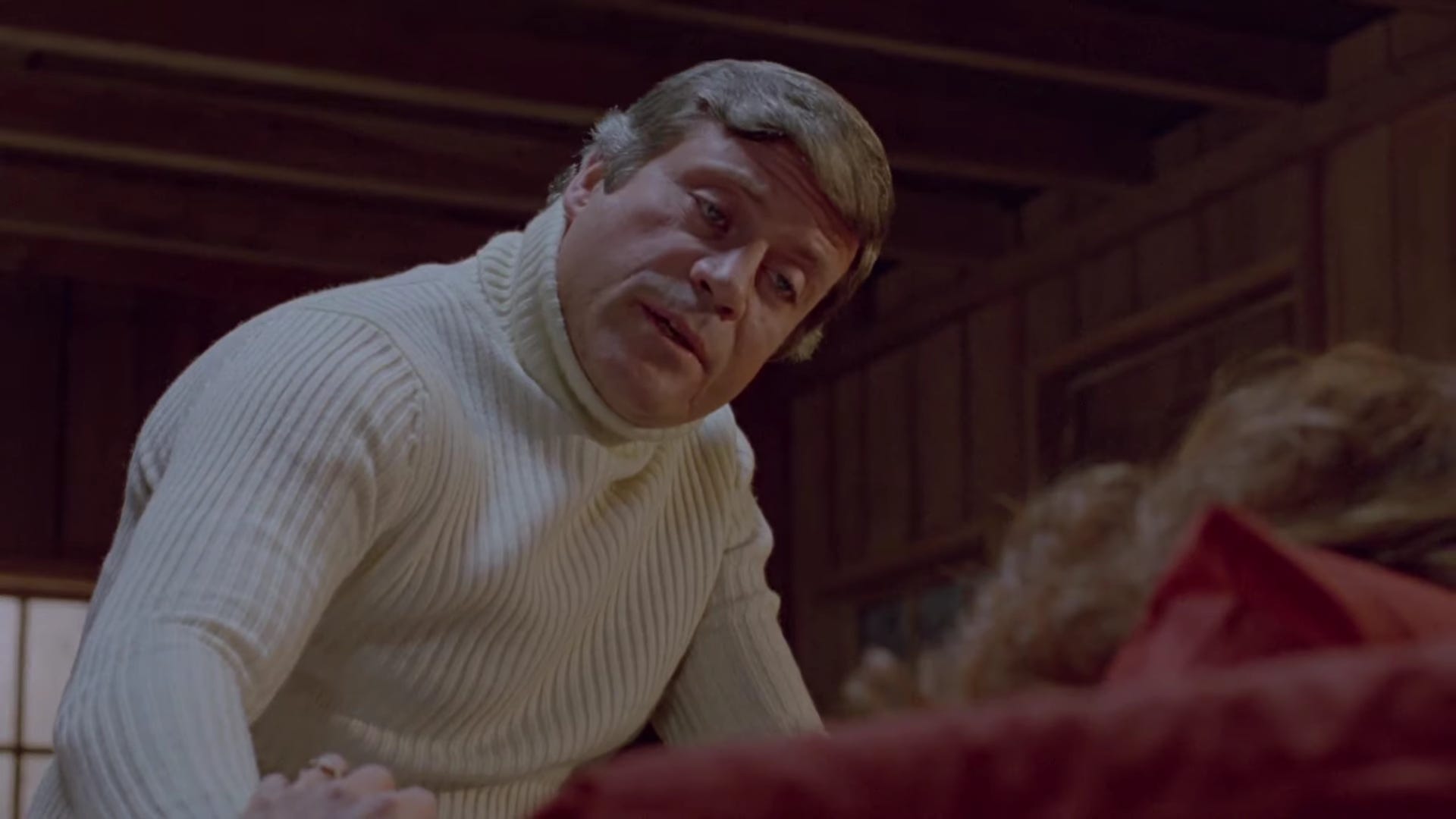
The Brood is not a particularly good movie. It’s a typical Cronenberg horror production featuring a cardboard everyman playing opposite two cartoons in a melodrama as ridiculous in its supernatural plot points as it is implausible in its quiet moments. I’m not going to be talking about this movie because it’s a great film, although it’s not entirely uncompelling viewing. I’m looking at it as a biting allegory for the consequences of psychoanalysis.
The movie has a simple premise really. It attempts to answer the question: “When is it ok to strangle your crazy she-devil wife?” The answer involves mutant midget thoughtforms, body horror talk therapy and a very traumatized little girl. The film revolves around a type of psychotherapy called psychoplasmics – a technique where mental illnesses are triggered and released as physical symptoms. Presumably, these physical ailments are meant to be treated in place of the psychological ones, but the busy doctor never seems to get to the healing part.
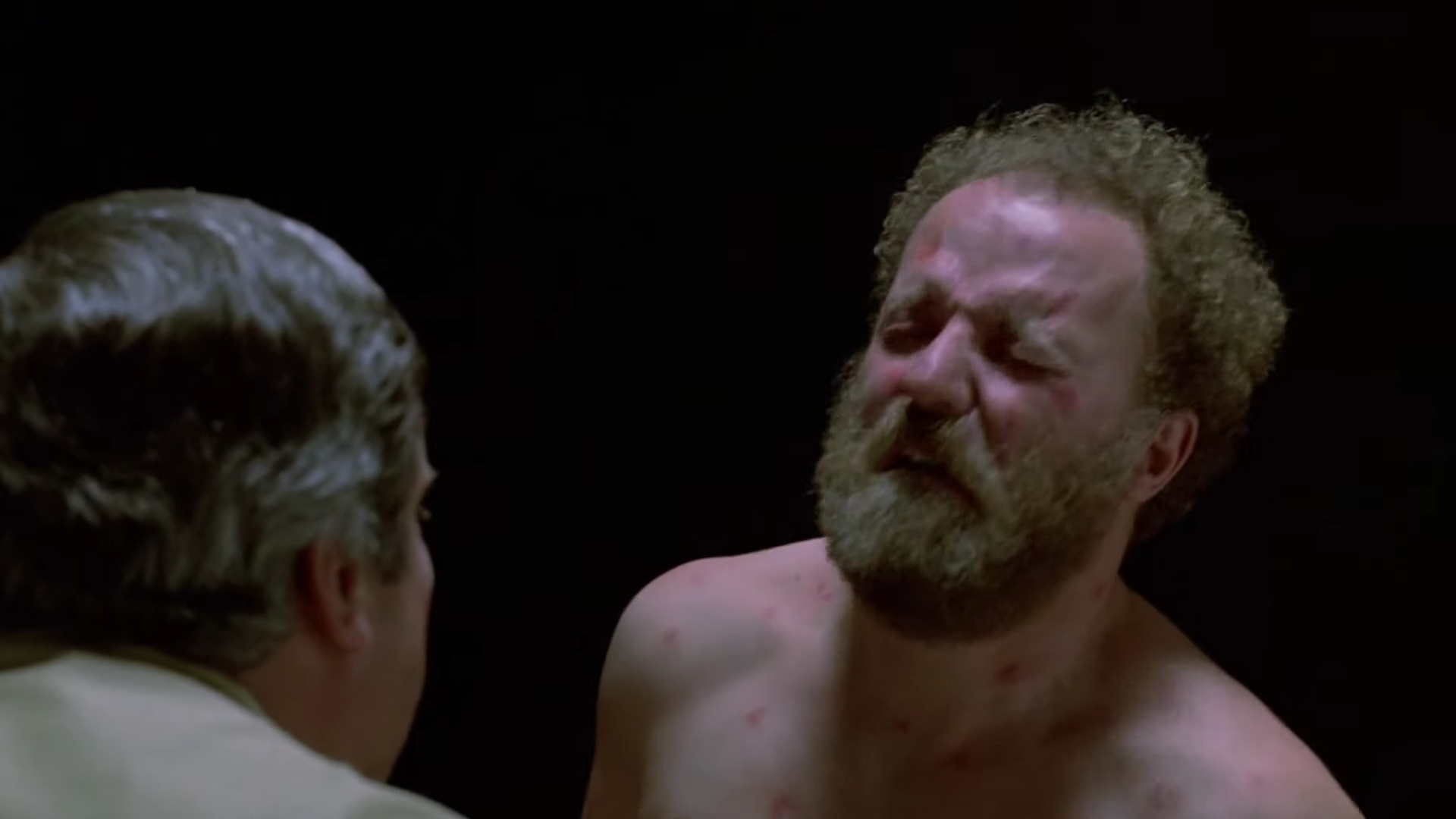
Before we’re introduced to the protagonist, Frank, or his deranged wife Nola, we begin in the audience of one of these psychoplasmics session. In what seems at first to be psychoanalytic avant-garde theater Dr Raglan (played by a hammy, but very enjoyable Oliver Reed) is channeling the father of sniveling Michael. Michael is a remarkable figure – the summation of all that mankind both shouldn’t be and doesn’t want to become. He cries to his stand-in Daddy that he only wants to have his love, while the psychoplasmic father figure calls him a girl and an embarrassment. The breakthrough occurs as welts raise all over the sad pathetic man’s skin and his distasteful display bizarrely wins the affection of the therapist father.
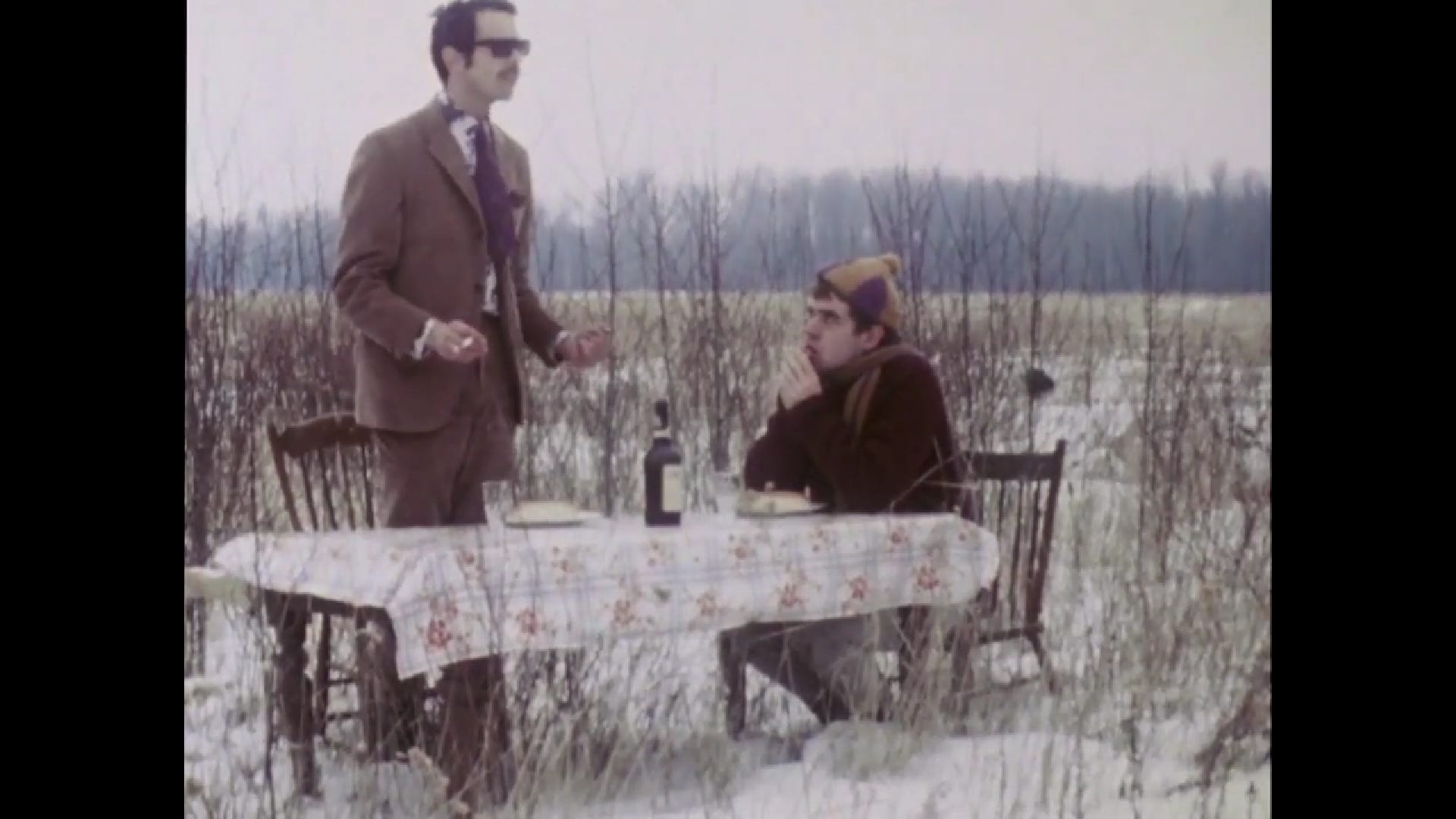
This mirrors Cronenberg’s first movie Transfer, where a similarly submissive and pathetic patient obsessively quests after his former therapist’s affection and approval. The metaphor is good: psychoanalysis serves as a sadomasochistic ritual wherein a dominating analyst figure allows a submissive patient figure to act outside all social boundaries. The analyst’s type of domination is catered to the patient: he plays Daddy for Michael and Mother for Nola, but behind all of these roles is Dr. Raglan – the remote figure whose approval is wanted and necessary.
But what about the welts? That’s the most perfect part. The breakthrough is not healing: it’s more sickness. Just like in Transfer, Michael invents pathologies to interest and amuse the doctor. Michael doesn’t get better: he becomes more pitiful and weak. He just becomes addicted to Raglan’s approval in place of his father’s. Later, when Raglan abandons him, he begs Frank to play his Daddy for him. He offers to bring up his welts, but acknowledges outside of the therapist-office BDSM club these don’t impress but disgust.
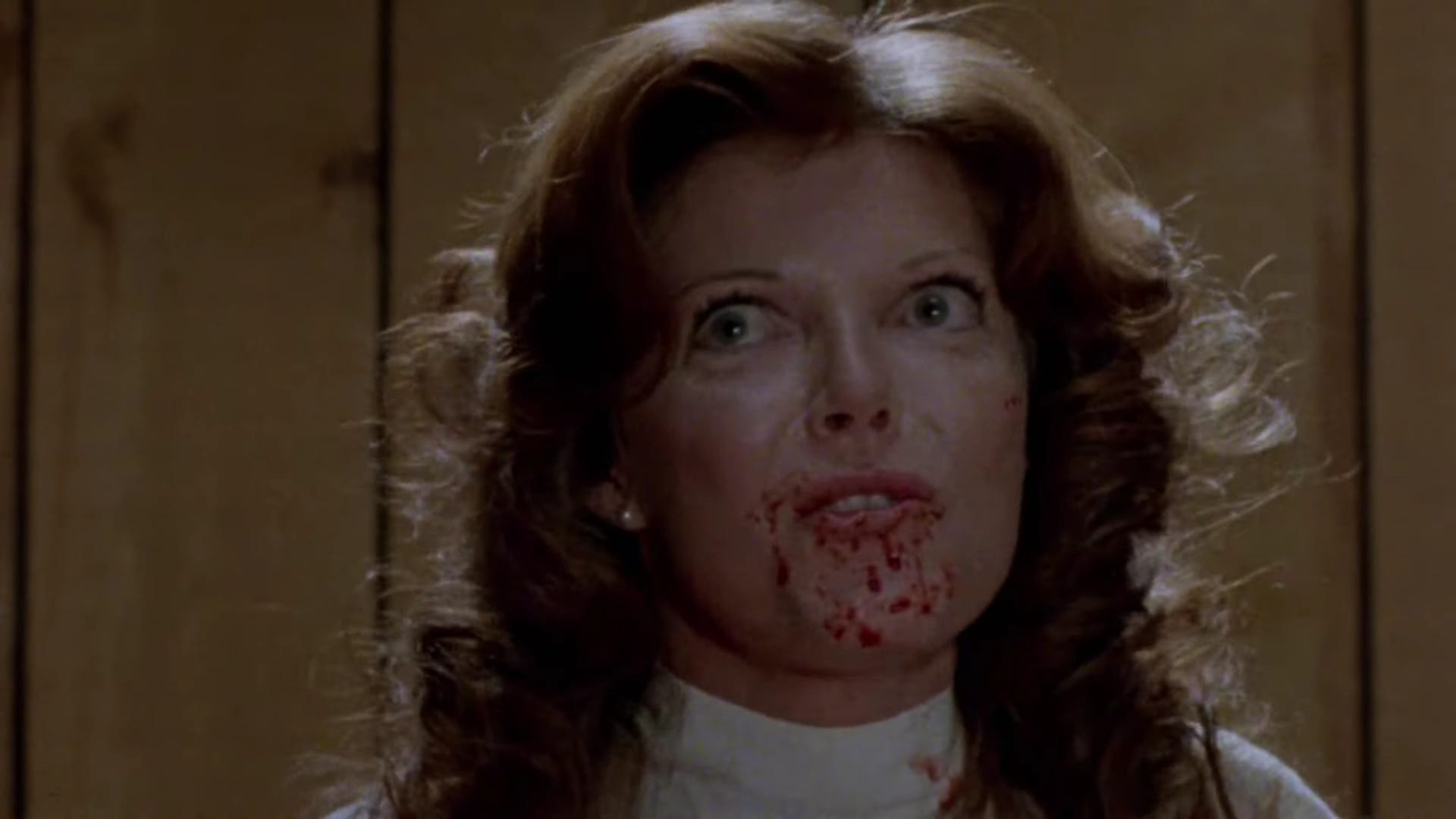
Disgust is the feeling most closely associated with body horror. Disgust and it’s twin pity, are the healthy reaction to the debased and unwell. Disgust is mentioned again later in the film when the insane, and ultimately worthless, Nola, becomes angry that the nauseating act of her birthing a fetus thoughtform disgusts her husband. This is what leads to her inevitably turning on him.

I suppose it’s time to talk about the thoughtforms – or Brood. They are creations of Nola’s therapy with Doctor Raglan. Nola is his star patient, the patient that will “prove psychoplasmics is the ultimate therapeutic device”. Because he helped her so much? Of course not, because she has so many, and such well formed, pathologies. The brood is made up of the children of “her rage”, Raglan’s psychological focus. That’s how he fixes problems. He doesn’t rid the patient of them, rather he fixes them like butterflies under glass – putting them in stasis, allowing them to be analyzed, sculpted and embroidered.
Like a lot of popular psychology, his is not an attempt at creating a future but at litigating the past. He doesn’t solve problems – he justifies them. He plays, over and over, like a hammy record, their less than stellar childhood experiences. He plays out the deepest fears of the patient in an addictive scenario they can return to time and again. He allows the patient a chance to make l’esprit de l’escalier into l’esprit d’ici. It feels good, and because it feels good, it creates more of itself. Venting anger to rid yourself of an anger problem is like drinking as a treatment for alcoholism. It’s not likely to work, but addicts are still going to give it another shot. All the little resentments you had are brought to the surface with a few extra created for good measure. They’re given names, they’re given excuses, they’re given cute little outfits. Before you know it they’re mutant children looking to destroy the world that created them.
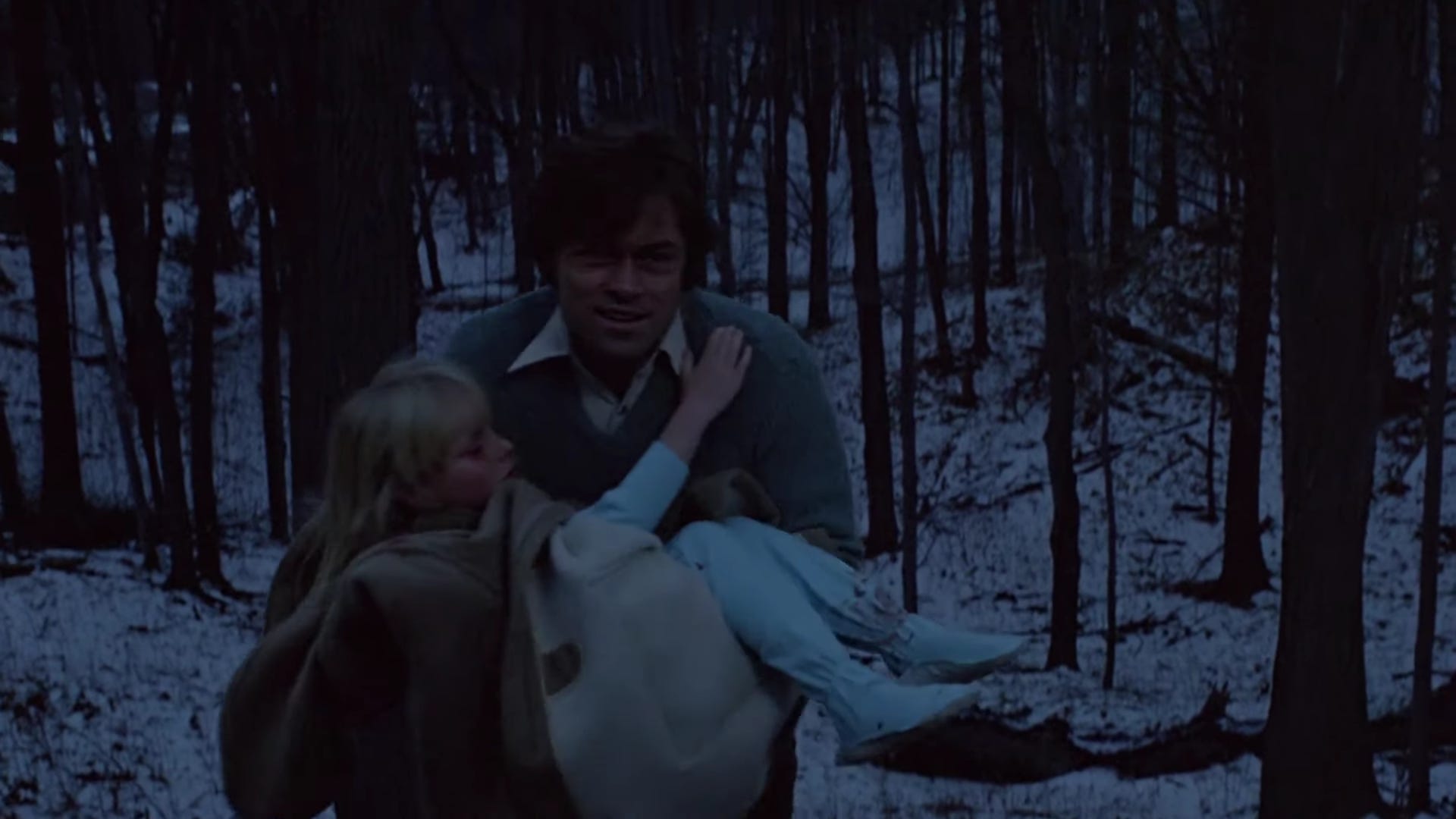
Let’s turn to Frank, our protagonist and Nola’s beleaguered husband. He’s stuck suddenly a single father to a girl: a girl who behaves as though she lacks a maternal presence, or so her teacher says. Well she is lacking one; her mother is off tending to her brood of psychological hang-ups. Nola is mother only to herself: she has no emotional room to care for real children. This is a characteristic form of narcissism that’s prescrbed therapy and only worsens in its presence. In the end, Nola decides she’d rather kill her child than face the shame of being separated from her - forcing Frank to kill her. At this point she’s surrounded by the bodies of her mother, father and doctor.
The film is a condemnation of talk therapy and particularly psychoanalysis: a movement that has died in the particular but whose reanimated corpse haunts all its therapeutic children. Freud’s baby envisioned the patient as a series of childhood moments playing out in adult bodies. Moments that were buried in the psyche and needed to be dug up and rehearsed on the couch of the therapist’s office. Mental health treatment has in some ways started to overcome this paradigm and in part has stepped beyond its schematic grasp with new techniques and new ideas. Yet its shadow is still there: that same insistence that problems must be completed to be solved. Too often therapy sees a problematic scaffolding and endeavors to finish the building before it tries to tear it down. The Brood contends that while in analysis we may finish construction, it’s not often we get to the demolition.
I will end with a brief conciliatory note. If you feel that psychoanalysis is for you I am not a dictator and cannot prevent you from engaging in it. Before you yell at me examine your conscience and look: what do you see? Is it a mutant child you nourished lashing out?
The way I see psychoanalysis is that it's either an opportunity to learn to see differently or to become mired in defenses and distraction, and whichever one it is depends on the strength of your motive, both going into it and as it is renewed in each session. It requires constant upkeep, because it is easy, as you point out, to fall into justification and excuses and lies. But at the end of the day, the basic facts are that you have an opportunity to get words from your brain out of your skull, in the air, so they can be heard, and experience someone else's reaction to them, instead of just your own reaction, like you're used to. Their reaction isn't that important usually--but it does present an opportunity to further hone and refine *exactly* what it is you mean or you feel. There are limits to the process, which are important to recognize--not everything can or should be put into words. The challenge is being as honest as possible through the process, if not with the therapist, then at least with yourself. If you can do that, then you are bound to learn something. But if your motivation is needing relief, wanting to shirk responsibility, a search for an engrossing fantasy--you will, as you say, worsen with therapy.
I would also like to say: I really appreciated this critique of psychoanalysis. Very clearly and well put--the metaphors were really helpful!